
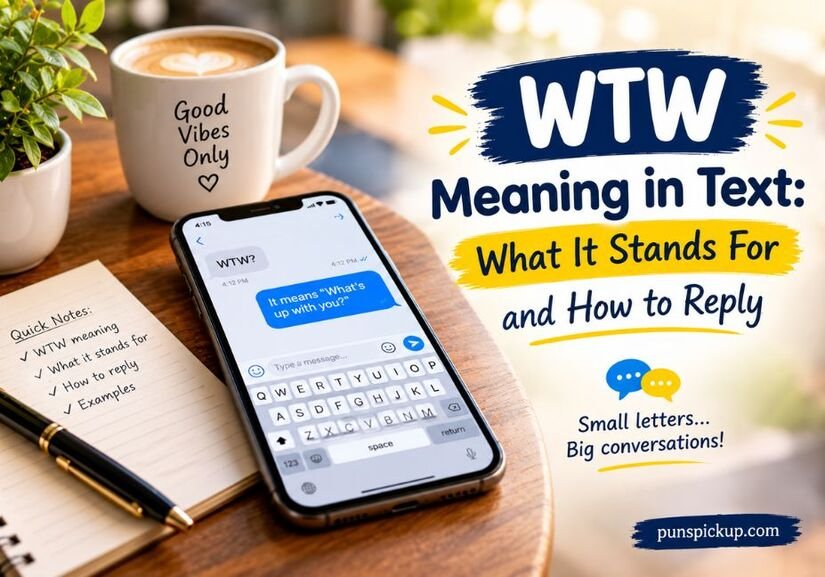
You open a message and see only three letters: “wtw.” It looks short and casual, but it can leave you guessing. The wtw meaning in text depends on the chat, the tone and the people involved.
This article explains the most common meaning and the other readings you may meet. You will also learn how to reply, how to tell the meanings apart and when to skip the slang.
Quick Answer
WTW most often stands for “what’s the word?” It is a casual greeting, much like “what’s up.” In some chats it can also mean “what to wear” or “what to watch.” Slang has no official rulebook, so the rest of the message decides which meaning fits.
WTW Meaning in Text: The Most Common Reading
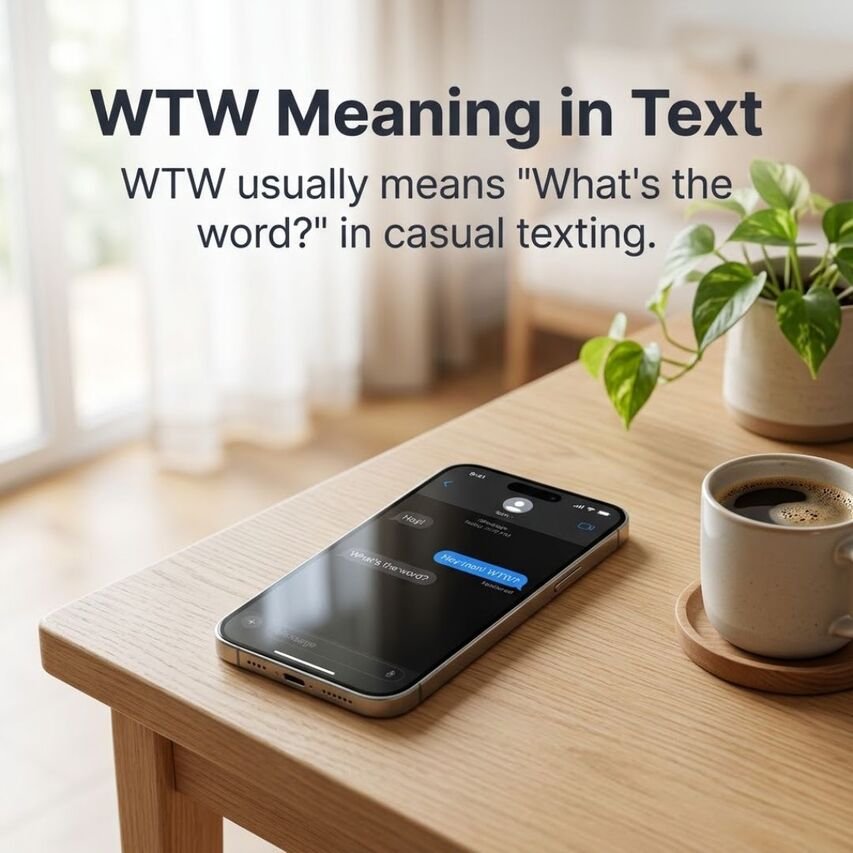
The meaning reported most often for WTW is “what’s the word?” People use it as a quick hello. It works like “what’s up” or “what’s going on.”
When a friend sends “wtw” alone, they usually want to start a chat. They may be curious about your day or your plans. They may also want to say hi without typing much.
The phrase “what’s the word” is a casual greeting in spoken slang. The text version trims it to three letters. That makes it fast to type, which is the main appeal of most texting abbreviations.
What the Greeting Usually Invites
A reply to this greeting usually shares news, plans or your mood. The tone is friendly and relaxed. Nothing about it is rude or serious.
Because it is so short, the sender often expects a short answer. A single line is fine. You do not need to write a paragraph.
Other Possible Meanings of WTW
WTW is not locked to one meaning. Slang guides list several others, and I could not confirm one official definition. Treat the readings below as possibilities that depend on context.
What to Wear
Before a party, date or trip, “wtw” can mean “what to wear.” The sender wants outfit advice or wants to know the dress code. A message about a plan or an event often comes right before or after it.
Example: “Dinner at 8. wtw?” Here the sender most likely asks what to wear.
What to Watch
Next to a streaming app or a movie plan, “wtw” can mean “what to watch.” The sender wants a show or film suggestion for the night.
Example: “Free tonight. wtw on Netflix?” The mention of a streaming service points to this reading.
What’s the Wave
Some guides report that “wtw” can mean “what’s the wave.” It is another casual way to ask what is happening or what the plan is. It works much like the main greeting.
Worth the Wait
Less often, “wtw” can mean “worth the wait.” People may use it after waiting for a product, a meal or an event.
Example: “That album was totally wtw.” The sender says the wait paid off.
Walk the Walk
A few guides list “walk the walk,” which pairs with the phrase “talk the talk.” It is rare in texts and usually written out in full.
A small number of pages also list “what would you do” and “walk this way.” These appear less often and have weak support, so treat them as rare readings. If you see one of them, expect the sender to give extra clues.
How to Tell Which WTW Meaning Is Being Used
Start with the message itself. A bare “wtw” with nothing around it is most likely the greeting. A longer message with a plan or a topic often points to another meaning.
Look at the words near it. Clothing, parties and dates suggest “what to wear.” Movies, shows and apps suggest “what to watch.” Words about waiting suggest “worth the wait.”
Next, check the timing. A late evening message may be about plans or a show. A morning message may be a simple hello. Think about what the two of you were doing before the text arrived.
Finally, consider the sender. A close friend may use it as a casual greeting. A group chat may use it to settle a plan. If you still cannot tell, ask. A quick “wtw as in what to wear?” saves a mix-up.
Example Messages Using WTW
These examples are illustrations only. They show how the same three letters shift with context.
- “wtw?” sent alone: likely a greeting.
- “Party at 9. wtw?” likely means what to wear.
- “Movie night. wtw?” likely means what to watch.
- “That pizza was wtw.” likely means worth the wait.
Notice that each one has a clue nearby. The clue may be a time, a place or a topic. Without it, the greeting is the safest guess.
How to Reply to WTW
Your reply should match the meaning. A wrong guess can lead to a funny or awkward answer, so check the clues first.
When It Is a Greeting
Share a quick update or ask one back. For example, “Not much, just chilling. What about you?” Keep the tone light and short.
You can also use the moment to make a plan. A line like “Free later if you want to hang out” turns a simple hello into something useful.
When It Means What to Wear
Give a clear suggestion. You might say “Go casual” or “Wear something dressy.” If you know the venue, mention it.
When It Means What to Watch
Name a show or a genre. You can say “Try that new comedy” or ask what mood the person is in. A quick question helps you narrow the choice.
When You Are Not Sure
Ask politely. Something like “Do you mean what’s up or what to wear?” works well. Most people will not mind the question. It is better than guessing wrong.
Where People Use WTW
WTW lives in casual chats. You may see it in text messages, direct messages and group chats. It suits fast, short exchanges between friends.
It fits chats where people type in short bursts. Many users on social apps prefer quick abbreviations because they save time. The word often shows up in lowercase, since people rarely stop to capitalize slang.
Still, how often a term shows up depends on the group. Some friend circles use it a lot, and others never do. If your circle does not use it, you can skip it.
WTW vs WYD, WBU and WSP
WTW is easy to mix up with other short texts. Here is how they differ.
WYD means “what are you doing.” It asks about your current activity. WTW as a greeting is looser and does not focus on what you are doing right now.
WBU means “what about you.” You use it after you answer a question. HBU means “how about you” and works the same way.
WSP is a short form of “what’s up.” It is the closest match to the greeting version of WTW. If a friend uses one, you can reply the same way you would reply to the other.
Keeping these apart helps you answer correctly. A WYD text expects an activity. A WTW greeting expects an update or a plan.
When Not to Use WTW
WTW belongs with friends and peers. It is too casual for work emails, school messages or business chats. A manager, teacher or client may not know the term.
Many readers also will not understand it. A message to a person outside your circle should use plain words. Writing “What is the plan for tonight?” is clearer than “wtw.”
If you are unsure, spell it out. Clear writing never offends anyone. Slang should help your message, not block it.
Common Mistakes and Misunderstandings
The first mistake is assuming there is only one meaning. WTW changes with context, so check the clues around it before you reply.
A second mistake is treating a rare reading as the main one. Pages that list odd meanings can mislead you. Start with the greeting and move to the others only when the message points that way.
A third mistake is using it with people who may not know it. A confused reader may take it as a typo. If your audience is mixed, write the full phrase.
A fourth mistake is reading too much into tone. Because the text is so short, it has little emotion. A friend who sends “wtw” is usually just being casual, not cold.
Why Texting Abbreviations Keep Changing
Texting slang grows from the need to type fast and sound friendly. Many abbreviations shift meaning from one group to another. You can read more about this on the Wikipedia page for internet slang.
For a wider look at how short forms work in messages, see the Wikipedia article on SMS language. These pages explain texting shorthand in general and do not define WTW itself.
Because slang moves quickly, a meaning you learn today may change. When in doubt, trust the context of the chat over any list.
FAQs
What does WTW mean in a text message?
WTW most often means “what’s the word?” It is a casual greeting. It can also mean “what to wear” or “what to watch” depending on the chat.
Is WTW the same as WYD?
No. WYD asks what you are doing. WTW is usually a looser greeting, though the two can overlap in a casual chat.
How do you reply to WTW?
Reply to match the meaning. For the greeting, share a quick update. For other meanings, answer the clue in the message.
Is WTW rude?
No. It is casual and friendly. It only seems off in formal settings, where plain words work better.
Conclusion
WTW most often means “what’s the word?” and works as a relaxed hello. It can also mean “what to wear” or “what to watch” when the message gives clues. Use it with friends and spell things out in formal chats. When the meaning is unclear, the surrounding message tells you what it means, and a quick question solves the rest.